Jakarta is a city of contrasts. Spending 48 hours in Jakarta offers a chance to experience traces of its colonial past alongside its creative neighbourhoods, cafés, restaurants, and cultural spaces. In just two days, you can move from centuries-old architecture and traditional flavours to contemporary art, music, and dining, experiencing different sides of the capital without ever really leaving the city behind.
48 Hours in Jakarta: Tracing the City’s Colonial Past
Begin in Kota Tua, where Jakarta’s history is perhaps most visible. Around Fatahillah Square, Dutch-era buildings and cobblestone streets recall the city’s colonial past, when Jakarta was known as Batavia. The area is home to the Jakarta History Museum and some of the city’s most recognisable heritage buildings, including Café Batavia, housed in a beautifully preserved colonial building overlooking the square.
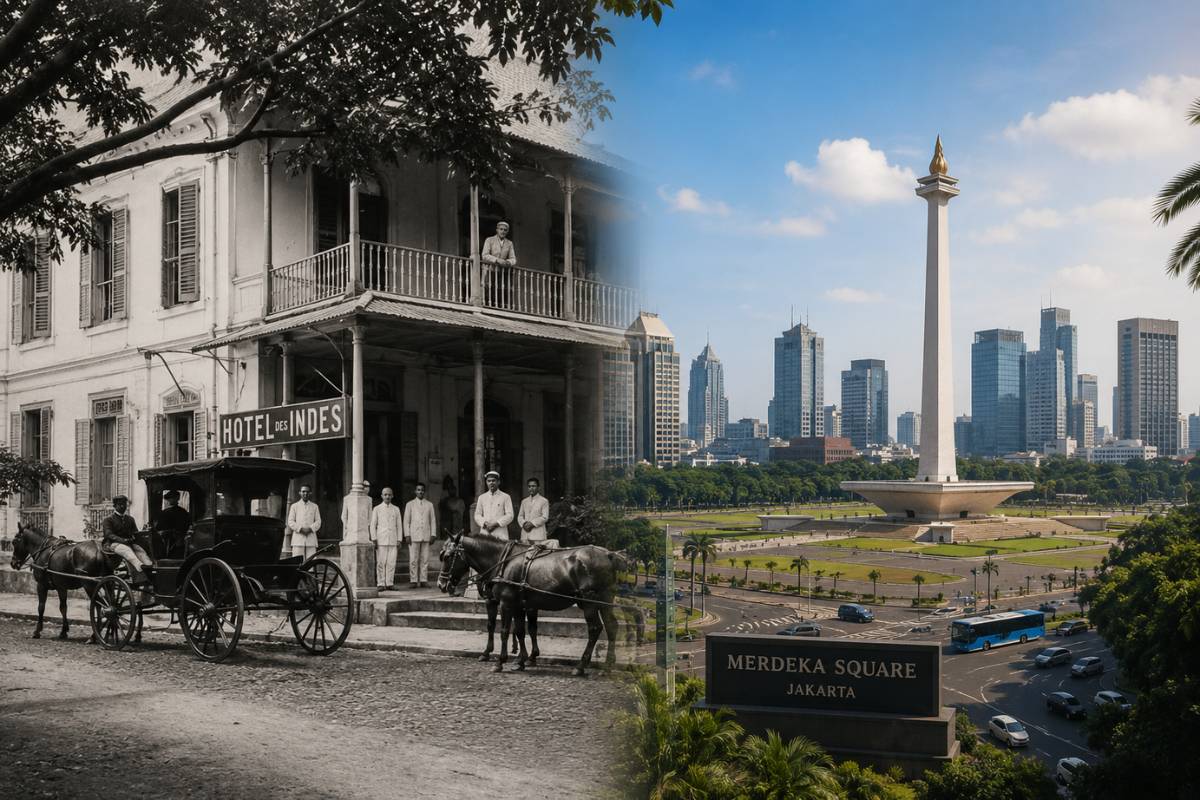
The story of Jakarta’s colonial heritage extends beyond Kota Tua. In Central Jakarta, Hotel Des Indes offers another glimpse into the city’s layered history. Once one of Batavia’s most celebrated hotels, Hotel Des Indes became part of the city’s colonial-era development and social history. Today, Hotel Des Indes still stands as a heritage-inspired hotel, carrying elements of that legacy into modern Jakarta while remaining part of the city’s evolving urban landscape.
From here, Jakarta gradually changes character. Merdeka Square opens up into one of the city’s grandest urban spaces, dominated by the National Monument, or Monas. Nearby, the National Museum offers another perspective on Indonesia’s past, with collections spanning ancient artefacts, textiles, sculptures, and cultural objects from across the archipelago.
48 Hours in Jakarta: Discovering Peranakan Heritage
Jakarta’s history is not only found in museums and colonial buildings. It can also be discovered through its distinctive culinary traditions. Peranakan cuisine offers its own window into Jakarta’s cultural heritage, with rich flavours and recipes shaped by generations of tradition and adaptation.
Exploring this culinary heritage adds another layer to the Jakarta experience. Traditional flavours continue to have a place alongside the city’s ever-evolving dining scene, offering a glimpse into a culinary tradition that remains part of Jakarta’s cultural landscape today.
48 Hours in Jakarta: From Historic Landmarks to Modern Culture
Beyond its colonial history, Jakarta’s architectural landscape reflects the city’s broader cultural diversity. Around Merdeka Square, Istiqlal Mosque and Jakarta Cathedral stand side by side, offering striking examples of the capital’s religious and architectural character. Their proximity is also a reminder of Jakarta’s long history of different communities living alongside one another.
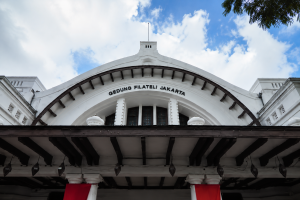
The city’s heritage continues to meet its creative present in places such as Pos Bloc. Housed within a historic former post office, the space has been given new life with local food, independent businesses, and creative spaces. It is one example of how Jakarta continues to reinvent its architectural heritage rather than simply preserving it behind museum doors.
Further south, the atmosphere becomes younger and more contemporary. At M Bloc Space, former government housing has been transformed into a creative hub filled with independent brands, music, food, and cafés. This is modern Jakarta at its most social, creative, and constantly changing expression.
And that is perhaps the best way to spend 48 hours in Jakarta: not by trying to tick every attraction off a list, but by following the city as it shifts between eras. From the colonial streets of Kota Tua and the heritage of Hotel Des Indes, to grand national monuments, historic religious landmarks, and the creative energy of South Jakarta, the capital tells its story through places, people, food, and architecture.
By the time your 48 hours are over, you may not have seen everything Jakarta has to offer. But you will have experienced something more valuable, which is a sense of how the old and the new continue to exist side by side in one of Southeast Asia’s most dynamic cities.
Getting Around Jakarta
A note for getting around: Jakarta’s traffic can be challenging, particularly during morning and evening peak hours. The MRT is a convenient way to move through the central and southern parts of the city, while ride-hailing services are useful for areas beyond the rail network. Give yourself extra travel time and let the city’s changing neighborhoods become part of the experience.